




What type of crown should you choose?
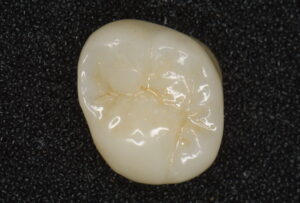
Zirconia Ceramic Crown
Which type of crown should you choose?
What science tells us is “not decisive,” and my proposal as director
Experience
My name is Hiroshi Miyashita, and I am the director of Tokyo International Dental Clinic Roppongi. For many years in clinical practice, I have performed a large number of restorations using crowns. I have seen many long‑term successful cases with both metal‑ceramic and metal‑free (such as zirconia) materials, and I routinely choose the material according to each patient’s values and oral conditions.
Expertise
I have clinical expertise in case selection for fixed prostheses (crowns), tooth preparation, occlusal adjustment, bonding/cementation procedures, and post‑operative maintenance. I provide treatment based on the latest literature regarding the properties of each material (strength, wear characteristics, esthetics, biocompatibility) and how these affect clinical outcomes.
Authority
In my clinical decision‑making, I incorporate conclusions from high‑quality meta‑analyses and randomized controlled trials, such as those from Cochrane. As highly reliable scientific evidence, these are integrated into our clinic’s treatment protocols.
Trustworthiness
In practice, I place great importance on informed consent that combines scientific evidence with each patient’s individual anatomical conditions, lifestyle, and preferences. I clearly explain clinical photos and long‑term prognosis, and treatment plans are decided only after obtaining the patient’s agreement.
Key points
An unexpected conclusion from science
According to high‑quality reviews such as those from Cochrane, when comparing metal‑ceramic crowns with modern metal‑free restorations (e.g., zirconia) over about five years, there is “no clear difference” in survival rate (longevity), complication rate, patient satisfaction with esthetics, or gingival health.
In other words, in many major outcome measures, the two are essentially comparable.
Clinical implication: “indication and technique” matter more than material
The long‑term success or failure of a crown is influenced more by factors other than the material itself, such as:
- Appropriate case selection (occlusal forces, remaining tooth structure, relation to adjacent teeth)
- Precise tooth preparation and impression taking (accurate margin reproduction)
- High‑quality cementation/bonding and post‑operative maintenance
That is, almost any material can last if everything is done correctly, but inappropriate indications or inadequate technique will more easily lead to problems.
The reality of esthetics
Thanks to modern dental laboratory technology, very high esthetic outcomes are now possible even with metal‑ceramic restorations.
Metal‑free materials, on the other hand, have advantages such as the absence of metal color. Therefore, it is reasonable to choose based on esthetic demands and whether the tooth is in a visible area (anterior vs. posterior teeth).
What matters most is clarifying “what the patient values.”
Periodontal and biological aspects
Regarding plaque accumulation and gingival response around crowns, current evidence provides little decisive support for superiority of one material over another.
Daily toothbrushing and regular professional care are the key factors for maintaining periodontal health.
Considering cost and the future
Cost, the expected frequency of replacement, and how easy future repairs or remakes will be are also important selection criteria.
For example, if we anticipate future occlusal re‑design, it is important to plan restoration strategies in advance according to the material used.
Conclusion (recommendation to patients)
From a scientific standpoint, we cannot say that “one option is absolutely superior” to the other. From my perspective, I recommend deciding in the following order:
- Indication based on tooth condition and occlusion (clinical necessity)
- The technique that your dentist can provide most reliably (their area of greatest expertise)
- Balance among your esthetic expectations, allergies, and financial considerations
Treatment does not end once you make a single decision. To help you make a choice you can truly accept, I review photos, models, and the specific pros and cons together with you, and then propose the most suitable plan.
If you have any questions or particular requests, please feel free to discuss them with me at any time.
Ask question/ Send the Email to Mr. Root canal, Dr. Miyashita
Make an appointment for consultation today.
Tokyo International Dental Clinic Roppongi
- Address: 5-13-25-2nd Floor, Roppongi, Minato-ku, Tokyo
- Phone: 03-5544-8544
- Closest Stations:
- Azabu Juban (Toei Oedo Line take exit7)
- https://youtu.be/iIeG91YEJTA The way to the clinic from Ohedo Line Exit7
- Azabu Juban (Tokyo Metro Namboku Line exit 5a )
- https://youtu.be/3yniFSfucGg The way to the clinic from Namboku Line Exit 5a
- Roppongi (Hibiya Line exit 3)
We look forward to helping you achieve a healthy, beautiful smile!
Supervision
Hiroshi Miyashita, Director, Tokyo International Dental Clinic Roppongi