




Redefining “Success” in Root Canal Therapy: The Surprising Truth Revealed by 3D Imaging (CBCT)
1. Introduction: Is your root canal treatment truly a “success”?
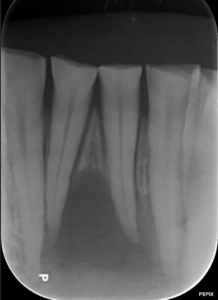
For decades, the gold standard for judging endodontic outcomes has been the 2‑D periapical radiograph (PR). With the widespread use of cone‑beam CT (CBCT), however, our long‑held definition of “success” is being challenged.
“On the periapical X‑ray the filling looks perfect to the apex and there’s no radiolucency—so why does 3D imaging still show a lesion?”
This discrepancy is not just about image sharpness. A recent meta‑analysis (Martins et al., 2025) lays bare a startling reality facing modern endodontics. Drawing on this study, we clarify—through a clinical lens—what “true success” means in the CBCT era.
2. Takeaway 1: Under 3D assessment, “success rates” drop dramatically (the shock of strict criteria)
Traditionally, success rates based on 2‑D radiographs hover around 90%. CBCT, however, paints a far stricter picture.
According to Martins et al. (2025), when applying strict criteria (clinical normality plus complete radiographic healing), tooth‑level CBCT success falls to about 45%. By contrast, using loose criteria (accepting lesion size reduction), success is ~85%, aligning closely with 2‑D outcomes.
Clinical insight: This gap reflects CBCT’s much higher sensitivity. CBCT readily detects subtle bone rarefaction that 2‑D films may miss. In short, many cases we previously labeled “healed” may actually represent “incomplete healing” with residual radiolucency.
“CBCT reveals lower success rates under strict criteria compared to loose criteria (36% vs 88%).”
(Note: 36% and 88% here refer to healing rates from image‑based assessments.)
3. Takeaway 2: Routine CBCT follow‑up may be “too much”
Though CBCT offers superior diagnostic accuracy, Martins et al. (2025) conclude routine CBCT in post‑treatment follow‑up is not always necessary.
Beyond ALARA (keeping radiation as low as reasonably achievable), there is a practical reason: under loose criteria (lesion shrinkage), CBCT outcomes closely match PR, providing little additional clinical value for prognosis in many cases.
Clinical insight: “Seeing too much” can lead to overdiagnosis. In asymptomatic patients with satisfactory 2‑D films, labeling CBCT‑only micro‑findings as “disease” risks unnecessary retreatment. Use technology not only to “see,” but also to avoid unwarranted interventions.
“CBCT outcomes under loose criteria align closely with PR, suggesting CBCT may not offer significant advantages for outcome assessment.”
4. Takeaway 3: Rethinking the healing timeline (12 months may not suffice)
Twelve months has long been a benchmark follow‑up. Under strict CBCT assessment, however, 1 year may be insufficient to confirm complete bony regeneration.
Verifiable 3‑D bony fill can require 3–4 years. Radiographic resolution of lucency often takes longer than we assume.
Clinical insight: Periapical tissues don’t always remodel back to native bone; stable “connective tissue scar” healing can occur. Biologically, that is not failure. A CBCT shadow at 12 months should not trigger a “failure” label—patient, long‑view endodontics is essential.
5. Takeaway 4: Multiple visits and proper technique improve quality
While single‑visit efficiency is popular, meta‑regression linked multiple‑visit treatment to higher healing under strict CBCT criteria, particularly in teeth with apical periodontitis (AP). Interim calcium hydroxide appears to enhance infection control biologically.
Other predictive technical factors identified:
– Apical preparation size: #30 or larger
– Taper: ≤.06
– Irrigation: robust NaOCl‑based chemical debridement
Deliberately pacing care to meet biological goals is the shortest path to true 3‑D healing.
Conclusion: A new relationship with “success” in the 3‑D era
CBCT is a powerful lens revealing truths we couldn’t see before. Its very power demands clinical wisdom in interpretation.
Is a small CBCT shadow a treatable lesion requiring retreatment, a normal phase of healing, or a stable scar? The answer requires integrating CBCT with clinical signs/symptoms and conventional PR—comprehensive assessment, not images alone.
Question to the reader: If you have no symptoms and your PR looks healed, but a tiny shadow appears only on CBCT—would you choose to re‑intervene?
Reference
Martins, J. F. B., Georgiou, A. C., Nunes, P. D., de Vries, R., Afreixo, V. M. A., da Palma, P. J. R., & Shemesh, H. (2025). CBCT-assessed outcomes and prognostic factors of primary endodontic treatment and retreatment: a systematic review and meta-analysis. Journal of endodontics, 51(6), 687-706.
Ask question/ Send the Email to Mr. Root canal, Dr. Miyashita
Make an appointment for consultation today.
Tokyo International Dental Clinic Roppongi
- Address: 5-13-25-2nd Floor, Roppongi, Minato-ku, Tokyo
- Phone: 03-5544-8544
- Closest Stations:
- Azabu Juban (Toei Oedo Line take exit7)
- https://youtu.be/iIeG91YEJTA The way to the clinic from Ohedo Line Exit7
- Azabu Juban (Tokyo Metro Namboku Line exit 5a )
- https://youtu.be/3yniFSfucGg The way to the clinic from Namboku Line Exit 5a
- Roppongi (Hibiya Line exit 3)
We look forward to helping you achieve a healthy, beautiful smile!