




Saving Your Teeth as the Ultimate Investment: How Precision Root Canal Treatment Transforms Quality of Life
1. Introduction: What is the Real Value of Your Natural Teeth?
“This tooth must be extracted and replaced with an implant.” If you have been told this, you should recognize that it is not merely a choice of dental treatment, but a critical moment for “risk management” regarding your vital biological assets. Retaining a natural tooth is not just a life-extending measure for a body part; it is a high-return investment to guarantee your long-term Quality of Life (QoL).
Interesting data exists from Nordic countries, which are leaders in advanced dentistry (such as the Swedish Social Insurance Agency: SSIA and Danish registry data). While the total number of root canal treatments (RCT) has trended downward over the past decade, reports (Razdan et al. 2022) show that the incidence of apical periodontitis (lesions at the tip of the tooth root) in untreated teeth is actually rising. This suggests that many individuals are overlooking potential risks and leaving them until it is too late. What affluent individuals should truly seek is “proactive diagnostic capability”—the ability to detect these “invisible lesions” early and intervene appropriately.
2. Preservation of Natural Teeth: The Foundation of Quality of Life
Preserving natural teeth through precision root canal treatment has a dramatically positive impact on oral-related QoL. Even in an era of advanced implant technology, no artificial material can surpass the “masticatory sensation” (proprioception) and the harmony with surrounding tissues provided by natural teeth.
“Declare the past, diagnose the present, foretell the future.” – Hippocrates (c. 460 BC)
As this maxim suggests, an excellent specialist analyzes the failures of past treatments and accurately diagnoses complex current pathologies to ensure a future where that tooth continues to function 10 or 20 years from now. When you consider the “life-cycle cost”—which includes not just the initial fee but also the physical and temporal burden of re-treatment or implant surgery following an extraction—it becomes clear that preserving the natural tooth is the wisest choice.
3. Entrusting a Specialist: The Shortest Route to Asset Protection
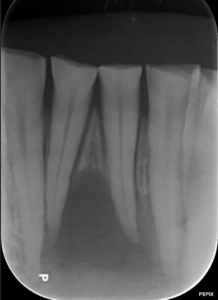
The success of root canal treatment depends primarily on “technical quality.” However, according to research by Wigsten et al. (2023), root canal treatments performed by general practitioners—especially in molars with complex structures—often result in “less than optimal” technical quality.
In fact, approximately half of the cases referred to specialists in Västra Götaland, Sweden, were for the “re-treatment of root canals previously performed by general dentists.” Incomplete treatment not only increases the risk of future recurrence and extraction but can also become a “negative asset” that robs you of your valuable time.
“End it perfectly in a single treatment.” To uphold this principle, entrusting difficult molars or re-treatment cases to a specialist from the start is the fastest track to protecting your asset of health.
4. 3D Diagnosis and AI: Visualizing the “Invisible Enemy”
Traditional two-dimensional (2D) X-rays have “diagnostic blind spots” due to anatomical overlapping. For example, in one case (Fig. 4: Teeth 15-17), identifying the lesion was “uncertain” using 2D X-rays or fistulography. However, by using dental CBCT (3D imaging), a widespread lesion extending from the second premolar to the second molar was accurately captured for the first time.
Furthermore, modern dentistry is reaching new heights through the use of Artificial Intelligence (AI). AI enables the detection of “vertical root fractures,” which are easily missed by humans, and provides prognosis predictions based on vast amounts of data. A treatment plan based on “certainty” visualized by technology is the standard of precision medicine befitting discerning patients.
5. Bioceramics and Regenerative Medicine: The Future of Root Canal Treatment
Materials and methodologies are currently undergoing a dramatic evolution.
- The Rise of Bioceramics: These materials possess antibacterial properties and dimensional stability that surpass conventional materials, biologically sealing the root canal.
- Utilization of Probiotics: As a countermeasure against antibiotic-resistant bacteria, next-generation sterilization methods applying beneficial microorganisms (probiotics) within the root canal are being researched.
- Epigenetics and Regenerative Medicine: The future is not just about filling holes. By using epigenetic regulators such as Histone Deacetylase Inhibitors (HDACis) to control cellular transcription, we can
Ask question/ Send the Email to Mr. Root canal, Dr. Miyashita
Make an appointment for consultation today.
Tokyo International Dental Clinic Roppongi
- Address: 5-13-25-2nd Floor, Roppongi, Minato-ku, Tokyo
- Phone: 03-5544-8544
- Closest Stations:
- Azabu Juban (Toei Oedo Line take exit7)
- https://youtu.be/iIeG91YEJTA The way to the clinic from Ohedo Line Exit7
- Azabu Juban (Tokyo Metro Namboku Line exit 5a )
- https://youtu.be/3yniFSfucGg The way to the clinic from Namboku Line Exit 5a
- Roppongi (Hibiya Line exit 3)
We look forward to helping you achieve a healthy, beautiful smile!