




The Surprising Truth About Dental Maintenance: What 30 Years of Clinical Data Reveal About People Who Don’t Lose Teeth
“Why do I still get cavities even though I brush every day?”
For years we’ve answered this universal question with “you’re not brushing well enough.” From a professional dental perspective, however, there are structural, scientific reasons underneath. Drawing on three decades of longitudinal clinical data from a single practice, this article presents evidence that upends conventional prevention wisdom. This isn’t “just another prevention pitch,” but a record of a biology‑driven strategy that measurably shapes your quality of life.
- Shocking Finding #1: It takes about five years for maintenance to show measurable benefits
Giving up on maintenance after a few months because you don’t “feel” fewer cavities is a missed opportunity. The data show a clear time lag before the impact of maintenance appears in numbers. Specifically for caries incidence, it takes roughly five years before a statistically significant difference emerges between those who maintain regularly and those who don’t. That’s the time needed for demineralization–remineralization balance to normalize and for the microbiome to re‑stabilize into a healthy ecosystem—both physically and behaviorally.
“The author believes it takes about five years before a difference in caries occurrence appears between maintenance and non‑maintenance groups.”
These five years are a “silent success” phase: objective metrics improve before patients notice subjectively. Short stints of care are “treatment”; five or more continuous years create a qualitative shift in the oral environment. - Shocking Finding #2: “Once a tooth is drilled,” you’re dealing with a different disease
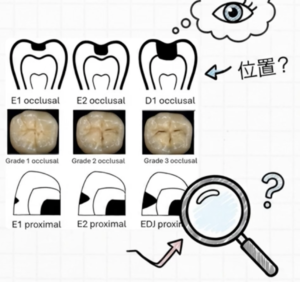
Caries should be viewed as a disease group, not a single entity. Primary caries in untreated tooth structure, secondary caries at restoration margins, and root caries on exposed root surfaces each have distinct risks and countermeasures. Maintenance is highly effective at suppressing primary caries, but even experts struggle to prevent recurrence at previously restored sites. Not drilling the first tooth isn’t idealism—it’s an evidence‑based point of no return. - Shocking Finding #3: Age 50 is the tipping point for periodontitis—deep pockets ≥7 mm surge
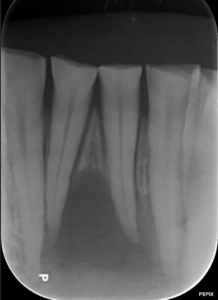
Periodontal disease follows a natural history. As early as the late teens, some individuals present with 4–6 mm pockets (attachment loss). Through the 20s and 30s, many “get by,” but around age 50 a cliff appears: initial periodontitis becomes the norm, and deep pockets (≥7 mm) rise sharply—mirrored by a steep drop in remaining teeth. You may be asymptomatic in your 40s; the seeds of disease sprout in your 50s. This is the structural reason many people begin losing teeth. - New understanding: Oral problems stem less from “disinfection” than from ecological shifts
Modern oral microbiology reframes toothbrushing from “dirt removal” to ecological management. Rather than simply “killing bad bugs,” the core issue is dysbiosis—microbiome imbalance driven by host status, diet, and saliva quality. Health (symbiosis) is like gardening: don’t scorch the weeds; enrich the soil so no species overruns the plot. Professional maintenance supports this ecological harmony. - Warning: The one habit that can nullify even excellent maintenance
No matter how advanced your professional care or meticulous your home hygiene, one habit can erase the gains: smoking. In 10‑year data analyzed with robust statistics, the strongest correlate of extractions—more than DMFT or periodontal severity—was cumulative cigarette count.
“Regardless of DMFT or periodontitis severity, the group with ≥321,200 lifetime cigarettes had the highest number of extractions.”
At ~20 cigarettes/day for ~44 years, the biological damage crosses a threshold. Beyond it, even the best maintenance can be outpaced by smoking‑driven tissue destruction. Smoking is the single biggest risk factor that can turn your maintenance investment into waste.
Conclusion: Your next decade is decided by the maintenance you do now
Thirty years of data show maintenance is not a quick fix for “today’s pain,” but a biological insurance policy safeguarding your smile and identity 10–20 years ahead. Choosing the maintenance chair today is not merely “a cleaning”; it’s a concrete investment—preparing for the periodontal cliff around 50, managing smoking risk, and tending the small ecosystem that is your mouth.
Where are you in your dental life stage—and what do you want to preserve for yourself 10 years from now? The next five years you commit beginning now will decide whether future‑you eats joyfully and smiles as yourself.
Ask question/ Send the Email to Mr. Root canal, Dr. Miyashita
Make an appointment for consultation today.
Tokyo International Dental Clinic Roppongi
- Address: 5-13-25-2nd Floor, Roppongi, Minato-ku, Tokyo
- Phone: 03-5544-8544
- Closest Stations:
- Azabu Juban (Toei Oedo Line take exit7)
- https://youtu.be/iIeG91YEJTA The way to the clinic from Ohedo Line Exit7
- Azabu Juban (Tokyo Metro Namboku Line exit 5a )
- https://youtu.be/3yniFSfucGg The way to the clinic from Namboku Line Exit 5a
- Roppongi (Hibiya Line exit 3)
We look forward to helping you achieve a healthy, beautiful smile!