




The Investment of “Extending Tooth Longevity”: The Science of the Cost of Skipping Regular Maintenance
For business executives who manage minute‑by‑minute schedules and build diversified asset portfolios, time is the scarcest resource, and health is the greatest “non‑fungible biological capital” that sustains performance. Yet many high achievers fall into a fatal “prevention blind spot,” undervaluing regular dental maintenance (Supportive Periodontal Care: SPC) as mere “cleaning,” and downgrading its scheduling priority.
A landmark systematic review in dentistry (Donnermeyer et al., slated for 2026), analyzing ~10,000 patients from 1947 to 2025, shows how maintenance continuity decisively improves “tooth survival.” This article reframes those findings—not as complex medical data, but as “investment insight” to protect your long‑term quality of life (QOL).
Takeaway 1: The numbers shock—skipping maintenance is a “negative compounding” that erodes asset value by 64%
If a business decision was shown to raise future asset‑loss risk by over 60%, an emergency board meeting would be called. In oral health, we often ignore an equivalent risk.
The latest meta‑analysis presents the stark reality facing patients with low adherence to dentist‑recommended SPC:
– Tooth loss risk per patient (odds ratio): 1.50×
– Tooth loss risk per tooth (odds ratio): 1.64×
Poor adherence creates a statistically powerful downside risk of “1.64×” per tooth. This is not an isolated mishap; it accumulates as “negative compounding,” leading to large future costs for implants or extensive esthetic rehabilitation—and, most importantly, the loss of the priceless asset of “chewing with your own teeth.” Regular maintenance is the single most important KPI to avoid these losses.
Takeaway 2: The biofilm science—how a “micro‑infrastructure” drives the caries–periodontitis loop
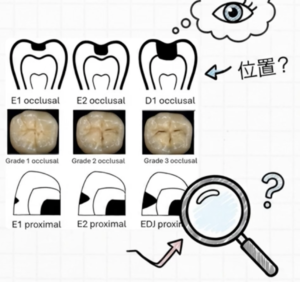
Caries and periodontitis were once treated as separate diseases. Modern science redefines them as “biofilm‑associated diseases,” twins with a common root cause.
Biofilm from inadequate oral hygiene creates anaerobic niches, and bacterial metabolites release acids. These acids demineralize teeth (caries) while provoking gingival inflammation (periodontitis). As biofilm mineralizes into calculus, it becomes a “permanent rough infrastructure” for bacterial growth—forming a robust base that personal brushing cannot disrupt.
“Apparently, both diseases are biofilm‑associated diseases and share at least one risk factor: insufficient oral hygiene, which results in the formation of oral biofilm structures on the tooth surfaces.”
Only professional mechanical disruption of biofilm and calculus removal (SPC) can reset this “bacterial infrastructure.”
Takeaway 3: The vulnerability of exposed root surfaces—the shifting risk profile behind “successful” therapy
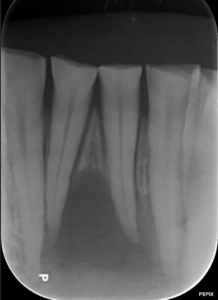
Ironically, when periodontal therapy succeeds and inflammation subsides, a new battlefield appears: the “root surface” exposed by gingival recession.
Unlike the crown’s resilient enamel, the exposed root’s dentin is less mineralized and structurally fragile. It more readily accumulates biofilm and is more susceptible to rapidly progressing caries.
Note: In the present systematic review, direct data for preventing root caries were very limited (essentially Pepelassi et al.). This “data scarcity” makes rigorous SPC and high‑concentration fluoride application an essential hedge against uncertainty.
Takeaway 4: Systemic effects—the inflammatory cascade of carbohydrate‑centric diets
“Sugar causes cavities” is an oversimplification. A carb‑centric diet can drive systemic, low‑grade inflammation—amplifying oral biofilm growth and systemic inflammatory responses, thereby worsening periodontal tissue breakdown in a vicious “inflammation loop.” Oral health must be reframed as the platform of a whole‑body “health portfolio,” not a siloed maintenance task.
Conclusion: Are your teeth being managed as lifelong assets?
SPC is not superficial “cleaning.” It is intelligent risk management: precise biofilm control, reinforcement of structural vulnerabilities, and integration of systemic inflammatory risk.
This strategy minimizes tooth‑loss risk and maximizes long‑term QOL—yielding standout returns versus other medical interventions. Are you deferring the single most reliable return in your health portfolio—maintenance every three months? That decision will determine the value of your lifelong “biological capital.”
Reference
Donnermeyer, D., Meyer-Lückel, H., Stähli, A., Cosgarea, R., & Wierichs, R. J. (2026). Does adherence to supportive periodontal care lower the risk of caries and related tooth loss? A systematic review and meta-analysis. Periodontology 2000.
Ask question/ Send the Email to Mr. Root canal, Dr. Miyashita
Make an appointment for consultation today.
Tokyo International Dental Clinic Roppongi
- Address: 5-13-25-2nd Floor, Roppongi, Minato-ku, Tokyo
- Phone: 03-5544-8544
- Closest Stations:
- Azabu Juban (Toei Oedo Line take exit7)
- https://youtu.be/iIeG91YEJTA The way to the clinic from Ohedo Line Exit7
- Azabu Juban (Tokyo Metro Namboku Line exit 5a )
- https://youtu.be/3yniFSfucGg The way to the clinic from Namboku Line Exit 5a
- Roppongi (Hibiya Line exit 3)
We look forward to helping you achieve a healthy, beautiful smile!