




Drill or Preserve? How the Latest “Caries Diagnosis” Teaches You to Protect Your Teeth for a Lifetime.

At the Tokyo International Dental Clinic, we evaluate the caries risk instead of just finding.
Sitting in a dentist’s chair and being told, “You have a small cavity, let’s drill and fill it,” is a scenario we have long accepted as “common sense.” However, we are now reaching a dramatic turning point in this paradigm.
Modern dental medicine—specifically, the international consensus (ORCA-EFCD)—is not merely about filling holes. It is a high-level healthcare strategy focused on biological preservation known as “Minimum Intervention Oral Care (MIOC).” When you rethink a cavity not as a “defect to be drilled” but as a “chronic disease to be managed,” the lifespan of your teeth will extend dramatically.
This article presents “strategic insights” based on the latest evidence to help intelligent readers update their own approach to healthcare.
Strategic Insight 1: Beyond Digital—The “Synthetic Judgment” of Skilled Clinicians
While trust in technology is high in modern medicine, a surprising fact has emerged in the field of caries diagnosis. The “visual-tactile method” used by a skilled clinician has been redefined as the most reliable first-line option—surpassing even the latest laser devices or digital diagnostic aids.
Why are high-end devices inferior to the human eye and hand? Because assessing the “activity” of a cavity requires “Synthetic Judgment”—the simultaneous and multifaceted evaluation of surface texture, luster, and plaque accumulation. Digital tools are merely auxiliary; observation sharpened by the five senses of a master clinician is the strongest line of defense against unnecessary intervention.
Strategic Insight 2: Texture Tells the Story of Your Teeth’s “Survival Strategy”
The notion that “cavity = black” is a thing of the past. In the latest findings, “surface texture and sheen” are more critical than color in deciding whether to drill.
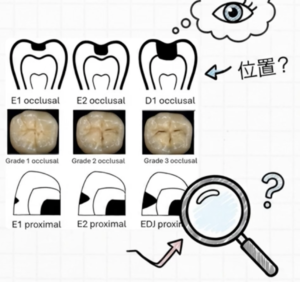
- Active (Progressing): The surface is opaque white like chalk (matte texture) and feels rough to the touch. This is an “alarming state” where minerals are currently being lost.
- Inactive (Arrested): The surface is smooth, shiny, and hard. Even if discolored, it is a “stable asset” where remineralization (repair) is complete.
Experts recommend monitoring “mixed lesions” or uncertain situations as “active” rather than drilling hastily. You do not need to fill every hole. Trusting a tooth’s capacity for remineralization and avoiding unnecessary invasion is the truly intelligent choice.
Strategic Insight 3: Subtle Signs from the Gingiva Expose Hidden Decay
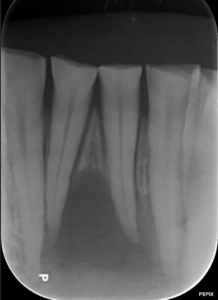
The space between teeth (proximal surface) is a “black box” that is difficult to see even for professionals. Modern diagnostic guidelines are focusing on the indicator of “local gingival bleeding.”
Bleeding specifically in that spot when probed gently with a specialized instrument is a key proxy indicating that a cavity is “active” in an invisible place.
“In the presence of a proximal caries lesion, locally enhanced gingival bleeding provoked by gentle probing of the sulcus should be considered as an indicator for lesion activity.”
This is not merely a sign of periodontal disease; it is evidence that the metabolic activity of bacteria lurking deep within is causing inflammation in the surrounding tissues.
Strategic Insight 4: “Cleansability”—The Ultimate Standard for Treatment
“Secondary caries” occurs around already treated fillings. Conventionally, the size of the “gap” between the filling and the tooth has been the focus. However, according to the latest standards, “cleansability”—whether the environment allows for thorough self-cleaning—is the ultimate determinant for treatment.
If the area can be reached and cleaned properly through brushing, it is not an immediate “failure” to be treated, even if a physical gap exists. Conversely, “non-cleanable irregularities” where instruments cannot reach become sites for bacterial colonization (predilection sites) and present the true risk. The true goal of treatment is not to fill holes, but to “reconstruct a healthy, cleanable environment.”
Strategic Insight 5: The End of Routine Examinations and the Era of “Precision Monitoring”
The routine of “annual X-rays” is no longer the global standard. The ORCA-EFCD consensus clearly states that intervals between checkups should be “personalized” according to individual risk profiles.
According to the latest guidelines, if you are low-risk and healthy, extending the X-ray interval to “5 to 10 years” is justified. Conversely, if active lesions are present, precise follow-up at 6–18 month intervals is necessary.
Seeking maximum management efficiency with minimum radiation based on your own risk: this shift toward “precision management” is the essence of sophisticated healthcare.
Conclusion: The “Strategic Dialogue” for Your Next Visit
In future dental visits, there is one question you should ask your dentist:
“Doctor, is this site ‘active’ right now? Or has the progression stopped?”
Do not settle for a binary “is there a cavity or not”—ask about the “rate of activity” and “cleansability.” That dialogue transforms the dental treatment from mere “filling holes” into a “partnership to protect your lifelong health.”
Are you still satisfied with old-generation treatment that just fills holes? Take the next step: embrace evidence-based “activity diagnosis” to protect your own health, your most valuable asset.
Reference
Neuhaus, K. W., Kühnisch, J., Banerjee, A., Martignon, S., Ricketts, D., Schwendicke, F., … & Splieth, C. H. (2024). ORCA-EFCD consensus report on clinical recommendations for caries diagnosis. Paper II: caries lesion activity and progression assessment. Caries Res, 58(5), 511-520.
Ask question/ Send the Email to Mr. Root canal, Dr. Miyashita
Make an appointment for consultation today.
Tokyo International Dental Clinic Roppongi
- Address: 5-13-25-2nd Floor, Roppongi, Minato-ku, Tokyo
- Phone: 03-5544-8544
- Closest Stations:
- Azabu Juban (Toei Oedo Line take exit7)
- https://youtu.be/iIeG91YEJTA The way to the clinic from Ohedo Line Exit7
- Azabu Juban (Tokyo Metro Namboku Line exit 5a )
- https://youtu.be/3yniFSfucGg The way to the clinic from Namboku Line Exit 5a
- Roppongi (Hibiya Line exit 3)
We look forward to helping you achieve a healthy, beautiful smile!
Hiroshi Miyashita DDS.
Specialist in Periodontology and Endodontics
Certified by the University of Gothenberg, Sweden in 1996