


Why Does Tooth Sensitivity Happen? A Friendly Guide to the Link with Tooth Wear (With Tips You Can Start Today)
Why do my teeth “zing” with pain?
- When the outer surface of a tooth (enamel) wears down, the inner dentin becomes exposed.
- Dentin contains many tiny tubules. When cold air or water makes the fluid in these tubules move, that stimulus reaches the nerve and causes a sharp “zing.”
- This is the true nature of dentin hypersensitivity (DH).
Key points from recent research (in simple terms)
- People with tooth wear are more than twice as likely to experience sensitivity than those without.
- The more severe the wear, the higher the likelihood and intensity of sensitivity—“severity is the key.”
- While brushing frequency or technique alone isn’t consistently a risk, the following are red flags:
- Excessive brushing pressure (scrubbing too hard)
- Brushing immediately after eating (the surface is softened by acid and gets abraded)
- Acidic drinks (citrus juices, soft drinks, sports/energy drinks) and “sipping/holding in the mouth” accelerate erosion and increase sensitivity.
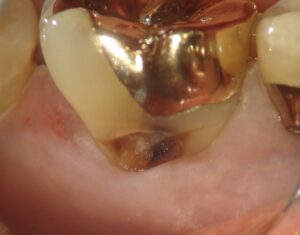
- Non-carious cervical lesions (NCCLs) and gum recession are strong signs that hypersensitivity is likely.
Common misconceptions
- “It’s just a little wear, so I’m fine.” → Once it progresses, sensitivity can jump quickly.
- “Brushing right after meals is best.” → Rinse gently first, then brush about 30 minutes later when the surface has rehardened.
- “A hard toothbrush and vigorous scrubbing are cleaner.” → High pressure causes wear. Aim for gentle technique, proper bristle angle, and enough time.
Actions you can start today (practical guide)
- Brushing
- Don’t press too hard (a good cue is that the bristles don’t splay).
- Brush twice a day, 2 minutes each. After meals: rinse first, then brush gently 30 minutes later.
- Ask your dentist about a night guard if you grind your teeth.
- Drinks and eating habits
- For acidic beverages: don’t hold them in your mouth; sip and swallow promptly; consider a straw.
- Take a neutralizing sip of water or milk between acidic drinks.
- Cut down on frequent snacking and sipping throughout the day.
- Toothpaste (how to choose for sensitivity)
- First-line ingredients: stannous fluoride (SnF), arginine
- Other strong candidates: nano-hydroxyapatite, oxalates
- Try for at least 2 weeks to gauge effect (twice daily, 2 minutes). If it doesn’t suit you, switch the active ingredient.
- When to see a dentist
- If you have root surface notches, gum recession, or sensitivity that persists or worsens, see your dentist.
- Ask for an assessment of “tooth wear severity” early—this makes your plan more concrete.
Summary
- Hypersensitivity is a sign that your tooth’s outer defense is compromised and stimuli reach the nerve more easily.
- Causes are multifactorial: acidic drinking habits and “sipping style,” excessive brushing pressure, grinding, and gum recession often overlap.
- Focus on wear severity and daily habits. Gentle care + smarter drinking + the right toothpaste can address the root of the problem.
Reference
Denucci+2026 Association of tooth wear with dentin hypersensitivity: A systematic review. Periodontology 2000. 2026;00:1–10.
Ask question/ Send the Email to Mr. Root canal, Dr. Miyashita
Make an appointment for consultation today.
Tokyo International Dental Clinic Roppongi
- Address: 5-13-25-2nd Floobonyuur, Roppongi, Minato-ku, Tokyo
- Phone: 03-5544-8544
- Closest Stations:
- Azabu Juban (Toei Oedo Line take exit7)
- The way to the clinic from Ohedo Line Exit7
- Azabu Juban (Tokyo Metro Namboku Line exit 5a )
- The way to the clinic from Namboku Line Exit 5a
- Roppongi (Hibiya Line exit 3)
We look forward to helping you achieve a healthy, beautiful smile!
Hiroshi Miyashita DDS.
Specialist in Periodontology and Endodontics
Certified by the University of Gothenburg, Sweden in 1996
医療法人社団EPSDC