



What You Should Know Before Accepting Extraction: A Prescription for Saving Teeth From Root Canal “Accidents”
1. Introduction: How to face an unexpected diagnosis
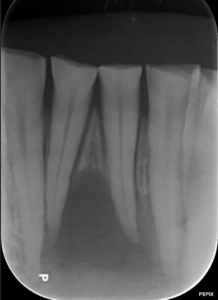
As in business, “complications” can occur in dentistry. During root canal therapy (endodontic treatment) or due to shortcomings of prior care, you may be told you have a perforation. This means the internal root canal system has become abnormally connected to external tooth tissues for mechanical or pathologic reasons.
When you hear, “There’s no choice but extraction,” accepting it as the only option is premature. A natural tooth is a non‑renewable “biological asset.” Current evidence shows a real chance to avoid extraction and preserve that asset. From an endodontic specialist’s perspective, here are strategic insights to overcome perforation and save your tooth.
2. Takeaway 1: Perforation is not “defeat” — survival exceeds 70%
Complications can feel like a treatment failure for both patient and clinician. Yet large meta‑analyses say otherwise: non‑surgical repair shows an overall success rate of 72.5%. Perforation is not an automatic ticket to extraction.
– How accidents happen: Instrument drift in complex canals, over‑preparation during post space creation, and challenging anatomy can cause perforation even with care.
– How often does perforation really lead to extraction? Only about 4.2% of extracted, post‑RCT teeth were lost due to perforation. Properly managed cases often function for years.
3. Takeaway 2: The bioceramic “MTA” offers hope—about 80.9% success
The single biggest prognostic variable is the repair material. The gold standard is Mineral Trioxide Aggregate (MTA), a bioactive cement. With MTA, success rises to ~80.9%. Why?
– Bioactivity: MTA fosters cementum regeneration and is osteoconductive, supporting cementoblast growth on its surface.
– Seal in moisture: Unlike many materials, MTA maintains a high‑quality seal in moist, blood/exudate conditions, strongly blocking reinfection.
“Non‑surgical repair using MTA achieves ~81% success—well worth attempting tooth preservation.”
4. Takeaway 3: Tooth position and status influence prognosis
Meta‑analysis shows key risk modifiers:
– Maxillary advantage: Upper teeth had ~2.22× higher success odds than mandibular teeth—likely due to richer vascularity aiding healing (and the need for careful diagnosis because complex anatomy can mask lesions on X‑rays).
– Infection control (absence of radiolucency): When no radiolucent shadow surrounds the perforation, success odds rise ~2.57×. That shadow signifies bone loss from bacterial infection—early repair, before infection advances, maximizes return on effort.
5. Takeaway 4: Expertise plus technology drives outcomes
“Who treats you and with what equipment” is decisive. Some specialist reports show >90% success—on par with primary RCT—driven by:
– Specialist training: Endodontists bring deep expertise for complex scenarios.
– Operating microscope: Direct visualization at >20× magnification enables pinpoint, void‑free MTA placement in sub‑millimeter defects.
Versus general repairs (often ~50–60%), specialist, microscope‑guided MTA repair can dramatically raise your odds.
Conclusion: Choose wisely
A perforation diagnosis is serious—but with evidence‑based repair (MTA) and microscope‑precise technique, “extraction” can become “preservation.”
A quick extraction is an irreversible loss of a vital asset. If trouble is found, will you accept extraction—or invest in a modern repair with >80% success potential? Wise decisions are the foundation of your healthy, fulfilling life.
Before You Extract: Evidence‑Based Repair of Endodontic Perforations (72.5–80.9% Success)
Reference
Siew, K., Lee, A. H., & Cheung, G. S. (2015). Treatment outcome of repaired root perforation: a systematic review and meta-analysis. Journal of endodontics, 41(11), 1795-1804.
Ask question/ Send the Email to Mr. Root canal, Dr. Miyashita
Make an appointment for consultation today.
Tokyo International Dental Clinic Roppongi
- Address: 5-13-25-2nd Floor, Roppongi, Minato-ku, Tokyo
- Phone: 03-5544-8544
- Closest Stations:
- Azabu Juban (Toei Oedo Line take exit7)
- https://youtu.be/iIeG91YEJTA The way to the clinic from Ohedo Line Exit7
- Azabu Juban (Tokyo Metro Namboku Line exit 5a )
- https://youtu.be/3yniFSfucGg The way to the clinic from Namboku Line Exit 5a
- Roppongi (Hibiya Line exit 3)
We look forward to helping you achieve a healthy, beautiful smile!